Custom Search

Saturday, March 12, 2022

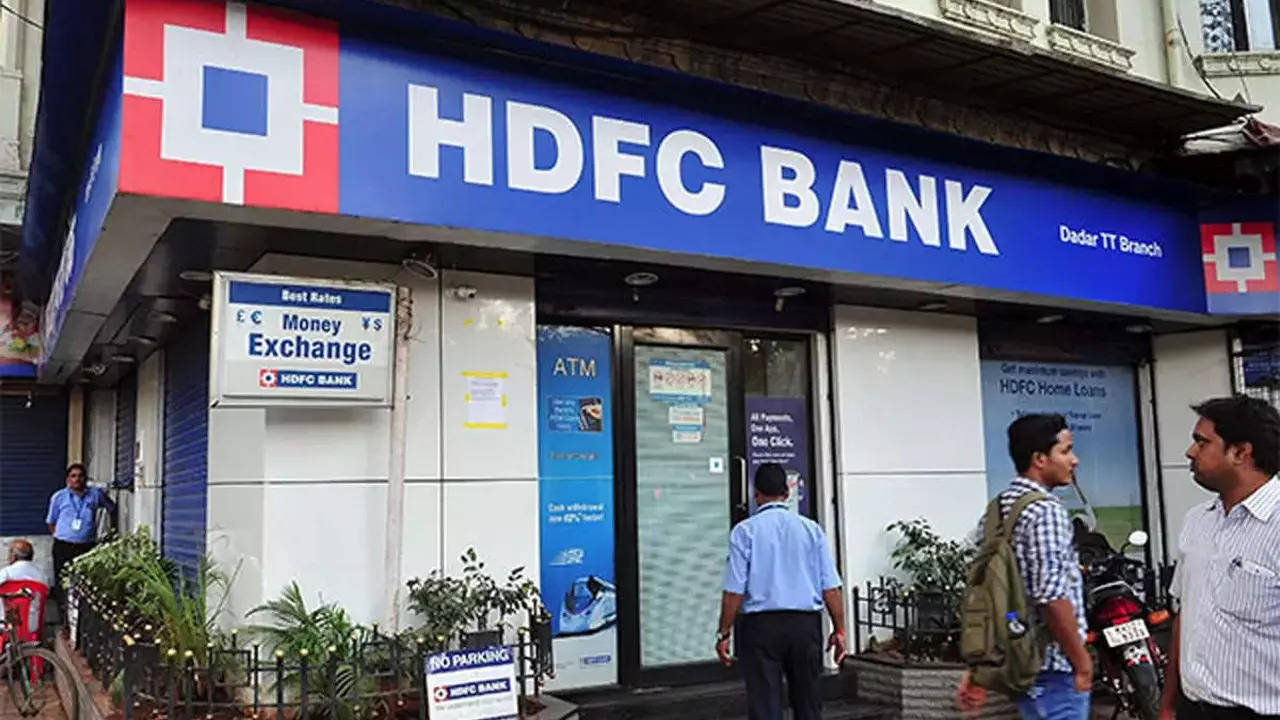
RBI lifts restrictions on HDFC Bank’s business generating activities under Digital 2.0 plan

In December 2020, The RBI had barred HDFC Bank from launching new digital products or services

from The HinduBusinessLine - Money & Banking https://ift.tt/N5Bxaef
Read more »

RBI lifts all restrictions on HDFC Bank's business-generating activities

HDFC Bank, which issues more than 2 lakh credit cards a month, was directed by the RBI in December 2020 to stop issuing fresh cards until it had sorted out its tech problems.

from Banking/Finance-Industry-Economic Times https://ift.tt/YNDPm8o
Read more »

Banks expect revolvers to make a slow return to credit card market

As spends dipped in January after the euphoria of the festive season, banks are bracing for a quarter of lower fee income from credit cards. In addition, card issuers are having to contend with income loss due to a fall in the share of revolvers in their credit card portfolios.

New customer additions in January 2022 stood at 13 lakh, down from 13.7 lakh in December 2021, even as the rate of customer addition hit a 19-month high of 15% year on year (YoY). Spends grew 35% YoY in January while moderating by 7% on a month-on-month basis.

Credit card customers are typically categorised as transactors and revolvers. Transactors are people who use their cards for spending, but prefer to clear their card bills by the due date. Revolvers are the ones who tend not to clear their dues in one go and incur interest payments on their spends. According to estimates by people in the industry, the share of revolvers in the credit card market used to be around 40% pre-Covid and it has shrunk to 28% now.

Bankers expect that it may be a while before the revolvers make a return to the market. Sanjeev Moghe, EVP & head – cards and payments, Axis Bank, said the system may see a much higher share of revolvers only in FY25 or later. “The share of revolvers has fallen by varying extents for all banks because the portfolios that got the moratorium and were written off during the last two years were mostly revolver portfolios. It might take about two years or more for the system to return to the previous levels of revolvers,” he said.

Others are more optimistic and they feel an improving economic environment may bring back people’s confidence in borrowing on their credit cards. Customers have avoided higher-cost borrowings amid the uncertainty of the pandemic, said a senior executive with a large private bank. “Initially there were fewer avenues to spend. When things opened up the second wave came and banks started to tighten conditions. The cycle is now coming back and it will be a few quarters before improved revolving behaviour plays out in our revenues,” he said.

Axis Securities took a similar view in its March 8 report. “We believe, with the Omricon variant causing no major disruption and restrictions being eased in Feb’22 and onwards, we expect the credit card spends and new customer sourcing to improve,” the broking firm said.

At the same time, card issuers would like to be cautious while increasing their exposure to revolvers as a steep and sudden increase could significantly raise the credit risk on their books.

The lower incidence of revolving behaviour is resulting in relatively poor utilisation of card limits, according to analysts. A report dated January 4 by Kotak Institutional Equities said utilisation rates have dropped in nearly all segments of various ticket sizes. “The sharp drop in spending as well as repayment by cardholders could explain the drop in utilisation rate,” the report said.


from Banking finance News: Banking finance Latest News, Banking finance Today news, Banking finance Breaking News - The Financial Express | The Financial Express https://ift.tt/8VfNaor
Read more »

We will target growth of 10-15% in gold loans in coming fiscal year: VP Nandakumar, MD & CEO, Manappuram Finance

Manappuram Finance reported a 46 % year-on-year (y-o-y) decline in consolidated net profit for the third quarter to Rs 261 crore . VP Nandakumar, MD & CEO, talks to Rajesh Ravi on the company’s performance and future outlook. Excerpts:

How do you review the  third quarter?

The important takeaway from our Q3 performance is that despite the Omicron impact, we have achieved good growth in our business volumes from our core business of gold loans, as also from vehicle loans and home loans. Our consolidated AUM of Rs 30,400 crore grew 7% sequentially and 10% year on year. Gold loans showed growth of 8.3% sequentially after suffering a decline in Q1. Likewise, there was good growth in vehicle and equipment finance and in home loans. However, the microfinance book posted a modest decline in volumes as we decided to go slow on fresh disbursements and focus more on collections in the context of the Omicron surge.

You have mentioned yield declining due to competition. What is the outlook?

In Q2, we had launched a few lower-yielding gold loan schemes targeting high-value customers, following the decline in volumes in Q1. It impacted the yield on gold loans, which fell from 25.3% in Q2 to 20.3% in Q3. These schemes were initially applicable to the larger ticket loans of Rs 1 lakh and over, and subsequently the eligibility was recalibrated based on market conditions. From what I can see, thanks to the abundance of liquidity in the market, the competition appears to be targeting business with a yield of around 17% in mind. But we are trying to maintain our yield at a somewhat higher level. In the process, our growth may get moderated for some time, say, one or two quarters more.  However, I believe that these other NBFC players may not be able to sustain business at that low yield and therefore they will have to increase their yield soon. That’s why I expect that the present phase of intense price competition among NBFCs will be a temporary phenomenon and in the coming quarters the situation will improve.

What about AUM and what is the guidance for the next fiscal?

Our consolidated AUM has grown by about 7% sequentially in Q3 and the growth was led mainly by gold loans. I expect improvement in the coming quarters given the declining trend of Covid-19 and expected recovery in economic activities, including the unorganised sector. Assuming that we don’t see further disruptions from the pandemic and newer variants, we would target growth of about 10 to 15% in gold loans in the coming fiscal year.

What about competition in large loans — ticket size of Rs 1 lakh and above?

Following the disruptions in the financial services sector caused by the pandemic, private and PSU banks as well as other non-gold loan-focused NBFCs had sought to counter the stress in their general loan books by pushing their gold loan offerings and competing on price. They had particularly targeted our high-value customers having loans above Rs 1 lakh for takeover. Since then, we have responded with aggressive efforts of our own to retain and attract high-value customers. The results are visible in growth in our gold loans portfolio, which crossed Rs 20,000 crore and is up 8.3% sequentially. Importantly, this was accompanied by proportionate growth in gold collateral which, at 70 tonne, is up 7.8% sequentially.

Do you feel that cost of funds has bottomed out and will rise in the coming quarters?

The cost of funds appears to have bottomed out as far as the lending rates of the banks are concerned, and the likely trend from now on will be upward. In our case, even if the incremental borrowing costs were to go up marginally, to the extent it replaces higher cost borrowings of the past, our average borrowing cost may continue to remain stable for a while. Besides, increasing interest rates may not be a problem because the pace of such increase will be calibrated, and we don’t anticipate any sudden shock. Also, if the cost of funds go up, it is likely to cut short the price competition among NBFCs and that will be positive for the sector.

Do you see the share of gold business coming down in the coming quarters?

Our microfinance business posted a modest decline in volumes in Q3 because we consciously chose to go slow on fresh disbursements to focus on prudent lending, given the uncertainties around the Omicron variant. At same time, our commercial vehicles business reported a brisk sequential growth of 19% to Rs 1,510 crore, while our housing subsidiary grew its book sequentially by 11.5% to Rs 817 crore. This was achieved despite the loss of momentum in the final month of the quarter. In the last two years, growth in the non-gold businesses was more affected by the pandemic. With economic recovery in the offing, this trend is likely to reverse.


from Banking finance News: Banking finance Latest News, Banking finance Today news, Banking finance Breaking News - The Financial Express | The Financial Express https://ift.tt/qVsQgkw
Read more »

RBI bars Paytm Payments Bank from onboarding new customers

The Reserve Bank of India (RBI) on Friday barred Paytm Payments Bank from onboarding new customers, citing “material supervisory concerns” observed at the bank. The regulator has also directed the bank to appoint an information technology (IT) audit firm to conduct a comprehensive system audit of its IT system.

“Onboarding of new customers by Paytm Payments Bank Ltd will be subject to specific permission to be granted by RBI after reviewing report of the IT auditors,” the central bank said.

In its red herring prospectus (RHP), the bank’s parent One97 Communications had said Paytm Payments Bank provides a digital wallet service that allows consumers to make payments at about 88,000 online merchants and 21.8 million registered in-store merchants as of June 30, 2021. Over 155 million Paytm UPI handles have been created by the bank as on the same date. The total fixed deposits under management, offered in partnership with commercial banks, stood at `2,020 crore. The bank had 65 million bank accounts as on June 30, 2021.

The RBI took action in exercise of its powers under Section 35A of the Banking Regulation Act, 1949. Section 35A gives RBI the power to issue directions to prevent the affairs of any banking company being conducted in a manner detrimental to the interests of the depositors or in a manner prejudicial to its own interests.

This is not the first instance of Paytm Payments Bank inviting the regulator’s wrath. In October 2021, RBI fined the bank Rs 1 crore for submitting information which did not reflect the factual position while applying for its final certificate of authorisation (CoA). One97 Communications clarified in its RHP that while Paytm Payments Bank had confirmed the completion of the transfer of the Bharat Bill Payment Operating Unit (BBPOU) business from One97 Communications to the bank on August 28, 2017, the RBI observed that the actual transfer of the business was completed only by March 31, 2021.

On June 19, 2018, the RBI had prohibited Paytm Payments Bank from opening any new accounts and wallets on account of supervisory concerns, which were lifted with effect from December 31, 2018. In a separate instance, the office of the banking ombudsman had issued a show-cause notice dated March 6, 2019, noting that Paytm Payments Bank could not monitor a certain account maintained with it which had shown a sudden increase in the velocity in daily transactions involving immediate transfer to other banks. The RBI ruled that the action resulted in the violation of provisions of its know your customer (KYC) norms.


from Banking finance News: Banking finance Latest News, Banking finance Today news, Banking finance Breaking News - The Financial Express | The Financial Express https://ift.tt/LZOsu7D
Read more »

Popular Posts

 
Desi Google | A2Z Famous Quotes | What's Cooking America | Joke Site